
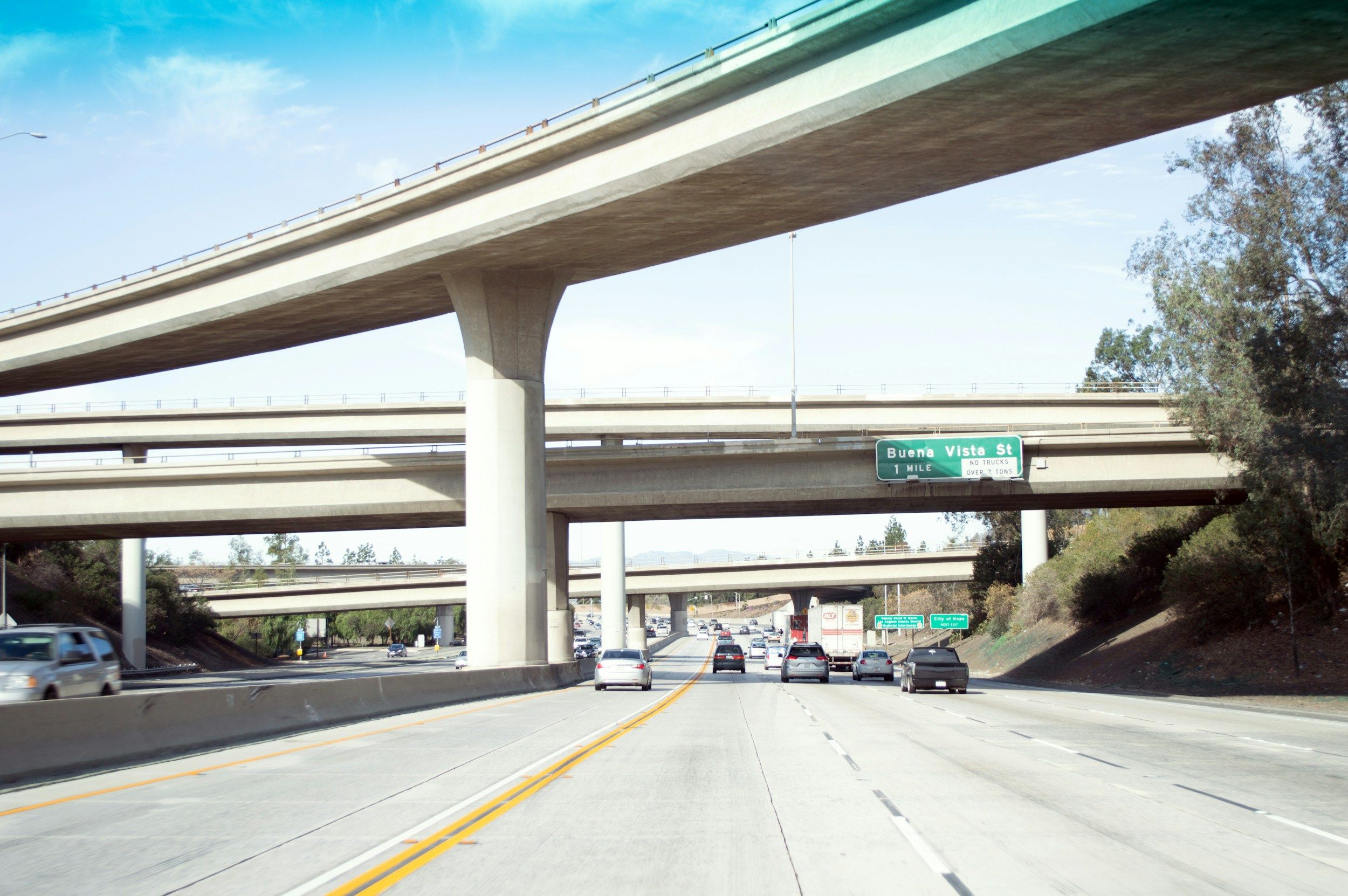
Santa Ana, at the middle of the Orange Crush
The CHP office that covers Santa Ana sits in the city itself, on East Santa Clara Avenue, and its page calls Santa Ana the heart of Orange County. That same page describes the Orange Crush, the transition where the 5, the 22 and the 57 come together, as carrying an average of 540,000 vehicles a day. The 5, the 22 and the 55 all run through the city.
Traffic like that produces the same kinds of claims again and again: rear-end hits in stop-and-go lanes, sideswipes on transition ramps, and cars struck while merging. Once the tow truck leaves, the question is money. If the car was repaired, how much value did the accident history take? If it was totaled, is the insurer’s number right? A diminished value appraisal in Santa Ana answers the first. A total loss valuation answers the second.
How the central Orange County market sets your car’s value
Every appraisal rests on comparable vehicles: cars like yours, for sale or recently sold, close enough to be a real alternative for a buyer. In central Orange County, that pool is deep. Dealers and private sellers in Santa Ana, Orange, Tustin, Garden Grove and Anaheim list thousands of everyday sedans, SUVs and pickups, so a fair comparison rarely needs to reach far.
That depth cuts both ways. It means we can usually find close matches for trim, mileage and options, which makes the number harder to argue with. It also means an insurer has no good reason to lean on cars listed in another region, or on a different trim with fewer features. When we see comparables from far away in a valuation for a common Santa Ana car, we ask why, and we show what the local listings say instead.
Condition matters as much as the listings. A car that spends its life in freeway traffic collects rock chips, curb rash and interior wear. Those are normal for the market, and the comparables already carry them. What should not happen is a condition deduction for wear your car does not have. We document the real condition at the inspection, with photos, so the report can push back on a generic rating.
Diminished value after a Santa Ana crash
When another driver causes the crash, California law lets you claim more than the repair bill. Civil Code section 3333 measures damages as the amount that makes up for all the harm caused, and a repaired car that sells for less because of its accident history has been harmed. That lost value is diminished value. The claim goes to the at-fault driver’s insurer; most own-policy coverage does not pay it.
Our diminished value appraisal builds the number from three things:
- The car’s value just before the crash, from Orange County comparables
- Its value now, repaired, with the accident on its history report
- The repair facts that move buyers: frame or structural work, airbag deployment, replaced panels and non-original parts
The repair invoice tells us much of that, but the inspection tells us the rest. Panel gaps, paint texture, overspray and mismatched trim show up in person and in close photos, and buyers notice them too.
When the insurer totals your car
If repairs would cost more than the car is worth, the insurer pays its actual cash value instead. California sets no fixed percentage for that decision. What the state does require, under its Fair Claims Settlement Practices Regulations at 10 CCR 2695.8, is a settlement based on comparable vehicles in your local market, plus applicable taxes and license and transfer fees.
Read the insurer’s valuation report before you accept. Check that the trim and options match your car, that the mileage is right, that the condition rating fits, and that the comparables are local and similar. Our total loss valuation does that review in writing, and if the actual cash value is low, it shows where and by how much. If your policy has an appraisal clause, the report can support it.
What to gather before we inspect
An in-person inspection is quicker when the paperwork is ready. Have these on hand:
The insurer’s valuation report or repair estimate, plus any supplements
The final repair invoice, with the parts list, if the car was fixed
Photos from before the crash, if you have any, and photos of the damage
Records for recent tires, brakes, upgrades or accessories
The other driver’s insurer and claim number
Small claims and the DMV in Orange County
If the at-fault insurer will not pay a fair diminished value amount, small claims court is an option you can use yourself. The California courts’ self-help guide says an individual can generally sue for up to $12,500, and lawyers cannot represent you in the courtroom. The Orange County court’s own small claims pages explain filing and hearings; our Orange County page links them and lists the county’s DMV offices and CHP areas. The general deadline to sue over damage to a car is three years under Code of Civil Procedure section 338(c)(1), and an attorney should confirm yours. A claim against a city, county or other public agency usually must be presented to that agency within six months (Government Code section 911.2).
On the DMV side, a collision must be reported to the DMV on an SR-1 within 10 days when anyone is hurt or property damage is more than $1,000, under Vehicle Code section 16000. If your car is totaled and you keep it, the insurer reports the retention, the car becomes a salvage vehicle, and putting it back on the road takes the DMV’s revived salvage steps, including an inspection. Factor that history into any decision to keep the car.
Booking a Santa Ana inspection
Santa Ana is about 36 miles in a straight line from our Glendale office, and we inspect there in person. Call (424) 444-3737 or get started online. The consultation is free, fees are agreed before any work begins, and most reports are finished within 2 to 4 business days.