Diminished value appraisal for repaired vehicles

A diminished value appraisal measures the market value a repaired car lost because its accident stays on its history, for California drivers claiming against the at-fault driver’s insurer. It compares local sales of clean and accident-history cars, shows the evidence behind the number, and ProValue Appraisal completes most reports in 2 to 4 business days.

Certified auto appraiser. Free consultation, no upfront cost.

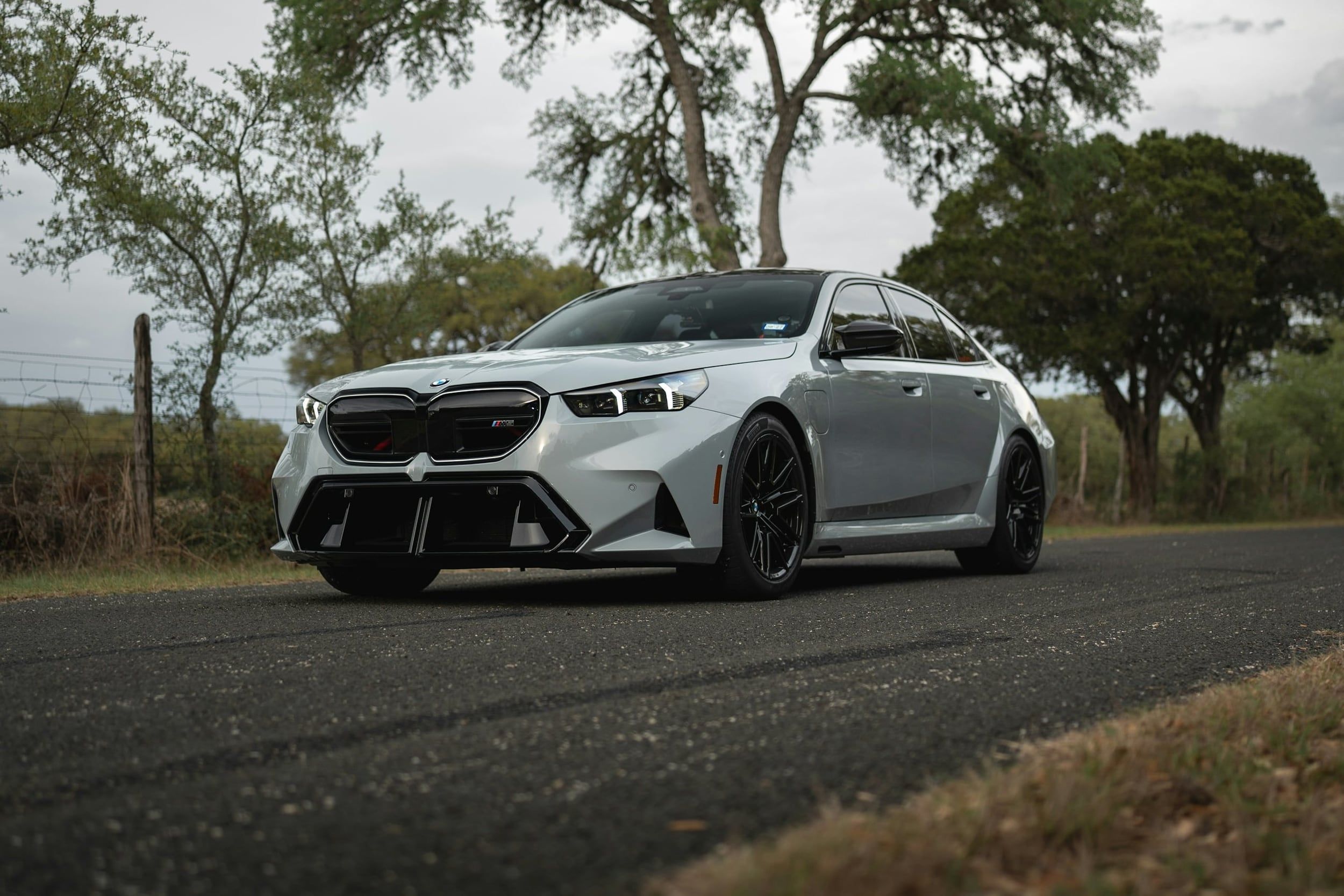
Silver luxury sport sedan with black wheels on a country road under oak trees

Clean history

$30,000

Repaired, accident on its history

$26,500

$3,500 apart, and it is the same car. Hypothetical example in round figures, not a client result.

Who pays
Usually the at-fault driver’s insurer. Your own policy usually does not, unless it says it pays for lost market value.
Cost to start
Free consultation, no upfront cost. Pricing is discussed when you call.
How long
Most reports in 2 to 4 business days.
If the insurer says no
You or your attorney can send the report with a written demand, go to small claims court, or talk to an attorney.
Main claim route
At-fault driver’s insurer
Report turnaround
Most in 2 to 4 business days
Free consultation
No upfront cost
California lawsuit window
Generally 3 years

What diminished value means for a repaired car

Picture two cars with the same year, make, model, trim, mileage and color. One has a clean history. The other was rear-ended last spring and repaired at a good shop. When both go up for sale, buyers usually pay less for the second car. That gap is the diminished value. It is a real financial loss even if you had no plans to sell this year, because it shows up the day you trade the car in or list it for sale.

Diminished value, often called diminution in value, is the loss in a vehicle’s market value after it has been in a collision and repaired. The repair puts the panels back. It does not erase the history. Vehicle history reports record the accident, and buyers and dealers price that history into the offers they make.

What sets the size of the gap

The size of the gap depends on the factors ProValue looks at in every assignment: the severity of the damage, the quality of the repairs, and the vehicle’s year, make and model. Mileage, pre-loss condition, factory options, service history and how buyers in your local market react to an accident report all matter as well. A minor bumper repair on an older, high-mileage commuter car may barely move its price. Structural repairs on a newer luxury SUV can move it a great deal.

A diminished value appraisal measures that loss for your specific vehicle. It compares what the car was worth just before the damage with what the same car is worth now, repaired, with its accident on record, and it shows the market evidence behind both numbers so an adjuster, attorney or judge can follow the reasoning instead of arguing with an unexplained figure.

The three kinds of diminished value

Appraisers and insurers usually separate diminished value into three types. Knowing which one applies to your car helps you read the numbers in a report and spot what an insurer left out.

Worth before the crashInherentRepair-relatedImmediateCrashRepairResale

A sketch of the idea, not to scale.

Inherent diminished value

When it appears
After any repair, even a flawless one
What causes it
The accident history itself; buyers hesitate to pay full price for a previously damaged car
How a diminished value appraisal treats it
The core of most claims: pre-loss value compared with the value of the same car carrying that history
Why insurers push back on it

Inherent diminished value is the loss that remains after a high-quality repair, simply because the car now has an accident history. Buyers often hesitate to buy a previously damaged vehicle, and dealers reflect that hesitation in trade-in offers. Inherent diminished value is the most common type in a claim, and it is the type insurers push back on most, because nothing about the car looks or drives differently.

When it appears
After a repair that falls short of factory standards
What causes it
Non-OEM or used parts, paint that does not match, uneven panel gaps, incomplete structural work
How a diminished value appraisal treats it
Documented separately, because it adds to the inherent loss
What the rules say about parts

Repair-related diminished value is the extra loss caused by the repair itself. If non-OEM (original equipment manufacturer) parts were used, if the paint does not match, or if the structural work was not fully restored, the car’s resale value drops further. A diminished value appraisal records these problems separately from the history loss, because a buyer or a pre-purchase inspector will find them.

California’s claims regulations give you some say over parts. Under 10 CCR 2695.8(g), an insurer may not require non-OEM replacement crash parts unless they are at least equal to OEM parts in kind, quality, safety, fit and performance, the insurer pays for any needed modifications, and the insurer warrants the parts and discloses that warranty in writing in its estimate. Asking those questions before the repair starts can prevent repair-related diminished value later.

Immediate diminished value

When it appears
Right after the crash, before any repair
What causes it
The visible damage plus the history
How a diminished value appraisal treats it
Relevant when the car is sold unrepaired, or when the damaged value is compared with the pre-crash value
When it matters

Immediate diminished value is the drop that happens the moment the accident occurs, before any repair. It reflects how the damage affects the car’s desirability and price. It matters mostly when a car is sold as-is after a crash, or when an owner needs the damaged value compared with the pre-crash value.

Who may pay diminished value in California

Who pays depends on who caused the crash and which policy the claim is made under. This is the most important part of a diminished value claim, and ProValue’s role in it is limited: ProValue writes the appraisal report. ProValue does not act as a public adjuster or give legal advice. In an appraisal clause case, Henry reads the insurer’s report and negotiates the value with the insurer’s appraiser. You or your attorney decide where and how to present the report.

Third-party claims against the at-fault driver’s insurer

When another driver caused the crash, most diminished value claims are presented to that driver’s liability insurer. California’s general measure of damages for a wrong that does not arise from a contract, such as a negligent crash, is the amount that compensates for all the detriment it caused, under Civil Code section 3333. That is why a loss in market value can be part of a property damage claim against the at-fault driver, alongside the repair bill. Whether a particular claim succeeds is a legal question for an attorney, not something an appraisal report decides.

Deadlines, and small claims court

The general deadline to file a lawsuit for damage to personal property, such as a car, is three years under Code of Civil Procedure section 338(c)(1). A claim against a city, county or other public agency usually must be presented to that agency within six months (Government Code section 911.2). An attorney should confirm the deadline for your claim. Do not treat the three years as time to wait: repair records, photos and comparable listings are easier to gather while they are recent.

If the at-fault insurer will not pay, you can take the claim to small claims court yourself. According to the California courts’ small claims guide, an individual can generally sue for up to $12,500, or up to $6,250 as a business. You cannot have a lawyer represent you in court, the filing fee is $30 to $100, a court date is typically about one to two months after filing, and if you win you must collect the money yourself. A diminished value appraisal report is the kind of organized evidence that helps a judge see how the number was reached.

First-party claims under your own policy

A claim against your own insurer works differently. The California Department of Insurance accident guide says that, generally, the company will pay the lesser of the amount needed to repair the vehicle or its actual cash value (CDI, So You’ve Had an Accident). A standard policy is built around repair cost and actual cash value, so whether your own policy pays anything for lost market value depends on its exact wording. Two California appeals court decisions, Ray and Baldwin, held that the policies before them did not owe diminished value after a repair; both are summarized in the court cases section below.

What to ask your insurer

Read the policy, and ask your insurer in writing what applies. Under 10 CCR 2695.4(a), every insurer must disclose to a first-party claimant all benefits, coverage, time limits and other policy provisions that may apply to the claim. If your policy has an appraisal provision and you and your insurer disagree about the amount of a covered loss, ProValue can serve as your appraiser in that process. See claim resolution and the appraisal clause for how it works.

Hit and run diminished value claims

When the other driver is never found

Diminished value matters for owners hit by drivers who leave the scene, too. When the other driver is never identified, there is no at-fault insurer to present a third-party claim to, and what you can recover depends on your own coverage. A diminished value appraisal still documents the loss while the evidence is fresh, which helps if the driver is identified later and gives you a record of the car’s condition and value if you decide to sell.

Uninsured motorist property damage coverage, often called UMPD, has its own rules in California. Under Insurance Code section 11580.26, it requires actual, direct physical contact with the uninsured vehicle, and either the driver must be identified or the vehicle must be identified by its license number. A hit and run driver who is never identified, in a car whose plate nobody got, does not meet that test. Where UMPD does apply:

  • Without collision coverage, it pays up to the car’s actual cash value or $3,500, whichever is less.
  • With collision coverage, your collision coverage pays for the damage, and UMPD covers your collision deductible, also capped at $3,500.

Separately, Insurance Code section 11580.2(c)(1) excludes your property damage from the bodily injury part of uninsured motorist coverage. Whether any of these coverages reaches lost market value depends on your policy wording, so ask your insurer in writing what applies.

Diminished value claims on leased and financed cars

When the car is not fully yours

If your car is leased, the leasing company owns it. Your lease may say who can claim lost value and how damage is handled when you return the car. Read the lease before you file, and ask an attorney if it is unclear. If your car is financed, you own it and the lender’s interest is on the title. A lower market value matters most when you trade the car in while a loan balance is still owed.

Key point: A diminished value appraisal does not guarantee that an insurance company will change its position. It gives you documented market evidence that may support your claim, your request for reconsideration, or your case in small claims court.

Not sure which road is yours?

Is a diminished value claim worth it?

An appraisal costs money, so the free consultation is the place to ask plainly whether your claim is likely worth the fee. Diminished value claims tend to be strongest when:

Tick what fits your car, then tell Henry.

Claims tend to be weaker on older, high-mileage cars with minor cosmetic damage, where an accident report barely moves the price. If that is your situation, the free consultation will say so. For a quick first read before you call, answer seven questions in the free diminished value check.

Diminished value checkA few quick questions about the crash, your car and the repair give you a plain read on whether a claim looks worth pursuing. Nothing you enter leaves your browser.

Why the insurer’s diminished value number can be low

When an at-fault insurer does offer diminished value, it may start with a formula instead of market evidence. The best-known shortcut is often called the 17c formula. It caps the possible loss at a fraction of the car’s value, then reduces that figure again with multipliers for damage severity and mileage. Because every step can only lower the number, the result can land well below what buyers in your market would actually take off the price. The 17c formula is an insurer shortcut, not California law.

  1. What the car was worth
  2. Capped at a fraction of that
  3. Multiplied down for damage severity
  4. Multiplied down again for mileage

The order of the shortcut. Widths are not to scale.

Formula numbers also tend to go wrong for reasons that have nothing to do with math:

  • No look at the repairA formula does not know whether non-OEM parts were used, whether the paint matches, or whether frame or structural work was done.
  • Generic market dataA national average ignores how buyers in your local market treat accident history on your specific model.
  • Mileage treated as a cliffSome formulas reduce higher-mileage cars to almost nothing, even when the model holds its value well.
  • No credit for trim and optionsA well-equipped car loses more in dollars than a base model, and a formula built on a generic value misses that.
What California says about low offers

California’s regulations say an insurer may not try to settle a claim with an offer that is unreasonably low. Among the factors listed in 10 CCR 2695.7(g) are the extent to which the insurer considered evidence submitted by the claimant to support the value of the claim, and the procedures the insurer used to determine the amount of property damage. A diminished value appraisal is that kind of evidence: specific to your car, supported by comparables, and written so the reasoning can be checked.

Hypothetical example

How the two numbers were reached

The following numbers are a hypothetical example in round figures, not a client result. A sedan was worth $30,000 just before the crash, supported by comparable clean-history listings in its local market. After a quality repair, comparable vehicles with a similar reported accident are listed and selling around $26,500. The documented diminished value is the $3,500 difference, and the report shows each comparable used to reach both numbers. A formula that never looks at those comparables can produce a much smaller figure for the same car.

Start your diminished value appraisal

ProValue Appraisal is a family-owned, independent auto appraiser in Glendale, founded in 2023, whose appraisers have more than 1,000 hours of appraisal work. The consultation is free, and fees are agreed before any work begins. Call (424) 444-3737, open Monday to Saturday, 9 AM to 6 PM, or start online with your repair invoice and photos ready, and you will know within one conversation whether a diminished value appraisal makes sense for your car.

What goes into a ProValue diminished value report

Every diminished value report is built from your car’s specific facts and from the market that is relevant to it, not from a broad regional estimate. A typical report includes:

  1. Vehicle identification

    Year, make, model, trim, VIN, mileage, factory equipment and condition before the crash.

  2. Damage and repair review

    What was damaged, what was repaired or replaced, and whether OEM parts were used, based on the insurer’s estimate, the final repair invoice and photos. Under 10 CCR 2695.8(f), when a partial loss is settled on an estimate prepared by or for the insurer, the insurer must give the claimant a copy, so ask for it.

  3. Pre-loss market value

    What the car was worth just before the crash, supported by comparable vehicles for sale or recently sold.

  4. Post-repair market value

    What the same car is worth now with its accident history and any repair shortfalls, supported by market evidence.

  5. The diminished value amount

    The difference, with the reasoning shown step by step so an adjuster can follow it.

  6. Supporting material

    The comparables and sources used, so the number can be checked rather than argued about.

The report is delivered as a signed PDF. If you have questions about it after you submit it, ProValue explains its findings to you in writing.

Reports are signed by Henry Terteryan, a certified auto appraiser, IAAA member ID 1007292026.

How the diminished value appraisal process works

  1. Free consultation

    Call (424) 444-3737 or use the get started form. You explain what happened, who was at fault, what has been repaired and how you plan to use the report (an insurer claim, an attorney, small claims, a sale). That intended use decides whether the assignment needs a physical inspection, a review of documents, market research, or a combination.

  2. Scope and fee

    The scope of work and the appraisal fee are agreed before any work begins, so you know what will be reviewed and how the value will be developed.

  3. Documents

    You send the repair paperwork, photos and claim details listed below.

  4. Inspection or photo review

    ProValue inspects vehicles in person in 13 counties, from San Diego and Imperial up to Santa Barbara, San Luis Obispo and Fresno. Owners elsewhere in California can use the online appraisal process with clear current photos, although some insurance claims still call for an in-person inspection.

  5. Market research and report

    The appraiser researches comparable vehicles with and without accident history and writes the report. Most reports are completed within 2 to 4 business days.

  6. Your next step

    You submit the report to the at-fault insurer with your demand, or give it to your attorney. ProValue stays in touch with you and your attorney while the work is under way, and if anything was missed, the appraisers go back and fix it.

Documents to gather for a diminished value appraisal

More on lost value

What the courts have said, what to do with the report, and the mistakes that cost owners money.

The law behind it, for you or your attorney

What California courts and jury instructions say about diminished value

Owners often ask whether a court has settled diminished value in California. No case promises a payment, but three sources shape how a diminished value claim in California is usually framed. They are summarized here as general information, not legal advice; an attorney can tell you how they apply to your claim.

CACI 3903J: repair cost plus the value still lost

The Judicial Council of California publishes the civil jury instructions California courts use, known as CACI. CACI 3903J covers damage to personal property, such as a car. Under it, the plaintiff proves the reduction in the property’s value or the reasonable cost of repair, whichever is less. An optional paragraph covers a car that can be repaired but will still be worth less afterward: damages are the difference between its value immediately before the harm and its lesser value after repair, plus the reasonable cost of repair, capped at the value immediately before the harm. It is the measure a jury can be instructed to use when a damaged car is repaired but still worth less, and it sits alongside the Civil Code section 3333 measure of damages described above.

Ray v. Farmers (1988): a collision policy and lost market value

In Ray v. Farmers Insurance Exchange (1988) 200 Cal.App.3d 1411, a California appeals court held that the owner’s collision policy did not cover the repaired car’s loss in market value. The court read the policy’s “like kind and quality” language as calling for repairs that restore the car to substantially the same condition; if that is not possible, the insurer pays actual cash value. One justice dissented. As a FindLaw summary of the case notes, Ray was about a first-party collision policy and did not decide a claim against an at-fault driver.

Baldwin v. AAA (2016): an insurer that repairs, and a diminished value exclusion

In Baldwin v. AAA Northern California, Nevada & Utah Insurance Exchange (Cal. Ct. App. 2016), the court held that an insurer that elects to repair a car is not obligated to pay its diminution in value, and that the policy’s exclusion for diminished value was enforceable and not against public policy. The court relied on Ray, and CACI 3903J lists Baldwin among its sources (Haight Brown & Bonesteel summary).

Put together: a claim against your own insurer depends heavily on your policy’s wording, while a claim against the at-fault driver rests on Civil Code section 3333 and the measure in CACI 3903J. Either way, the amount still has to be proved with evidence, which is what a diminished value appraisal provides.

Diminished value for motorcycles, RVs and commercial trucks

Diminished value is not limited to passenger cars. A repaired motorcycle can lose value the same way, and ProValue prepares diminished value appraisals for motorcycles from makers such as Harley-Davidson, Honda, Yamaha, Kawasaki and Suzuki. An RV that has been in an accident may also lose market value even after repairs, which matters for an insurance claim or a later sale. For semi-trucks, tow trucks, box trucks and other heavy equipment, a diminished value appraisal considers condition, configuration, maintenance and current demand in that commercial market. Note that the CDI mediation program described below does not apply to commercial auto coverage.

Loss of use while your car is in the shop

Loss of use is a separate item from diminished value: the cost of being without your car while it is repaired. California’s civil jury instruction CACI 3903M looks to the reasonable cost of renting a similar vehicle for the time reasonably needed to repair or replace yours. ProValue can help document it, with comparable rental rates and the repair dates from your invoice, alongside your diminished value report. Keep your rental receipts and the shop’s drop-off and pick-up dates.

Diminished value compared with actual cash value

Diminished value and actual cash value answer different questions. An actual cash value claim usually arises when the car is a total loss and the insurer pays its value at the time of loss. A diminished value claim arises when the car was repaired but is now worth less because of its accident history. If your insurer decided not to repair the car at all, start with a total loss valuation. If you are still arguing about the repair estimate itself, a collision damage appraisal comes first, because the quality of the repair feeds directly into diminished value later.

Mistakes that cost owners money

  • Signing a release too early. Read any release before you sign it. A final property damage release can close out the property damage claim, so raise diminished value first and ask an attorney if the wording is unclear.
  • Accepting a formula number without asking how it was built. Ask the insurer which method it used and which comparables, if any, support it.
  • Waiting too long. Evidence gets harder to gather over time, and the three-year lawsuit deadline under section 338(c)(1) is a general rule that an attorney should confirm for your claim; a claim against a public agency usually has six months.
  • Letting non-OEM parts go in without questions. Ask whether the insurer’s estimate specifies non-OEM parts and whether it discloses the written warranty that 10 CCR 2695.8(g) requires.
  • Never getting a copy of the insurer’s estimate. You are entitled to it under 2695.8(f) when the partial loss is settled on the insurer’s estimate, and the appraiser needs it.
  • Signing statements about fault at the scene. The CDI accident guide advises against signing statements regarding fault.

Your options after the diminished value report

Once you have the report, you or your attorney choose the next step:

  • Submit it to the insurer. Send the report with your written demand and ask the insurer to reconsider its number in light of the evidence.
  • Small claims court. For third-party claims within the small claims limit, you can file yourself.
  • An attorney. For larger losses, injuries, or legal questions about who owes what, speak with a licensed California attorney.
  • The policy’s appraisal provision. For a first-party dispute over the amount of a covered loss, if your policy has one.
  • The California Department of Insurance. For problems with your own insurer, call the CDI at 1-800-927-4357 or file a complaint online through its help page. The CDI automobile claims mediation program is free to policyholders and covers certain physical damage disputes with your own insurer, but it does not cover third-party claims against another driver’s insurer.
I had a great experience with ProValue Appraisal. Harut did an amazing job appraising my car. He was professional, thorough, and super easy to work with. He made the whole process quick and straightforward, and I felt confident in the results.
VivianVehicle appraisal

Find out what your vehicle is really worth.

Tell us what happened. We review your situation for free and tell you honestly whether an appraisal is worth it before you pay anything.

Certified auto appraiser. Free consultation, no upfront cost.

Call Henry

(424) 444-3737

Call Henry

Tell Henry what happened and what the insurer has offered. The consultation is free and there is no upfront cost.

Call (424) 444-3737

Open Monday to Saturday, 9 AM to 6 PM

Questions people ask

What does a diminished value appraisal measure on a repaired car?

A diminished value appraisal measures the difference between what your car was worth just before the damage and what the same car is worth now, repaired, with the accident on its history. The appraiser supports both numbers with comparable vehicles from your local market and reviews the repair itself, so poor workmanship or non-original parts are documented as part of the loss.

Can I claim diminished value from my own insurance company in California?

Usually not, unless your policy says it pays for lost market value. In Ray v. Farmers Insurance Exchange (1988), a California appeals court held that a collision policy did not cover a repaired car’s loss in market value. In Baldwin v. AAA (2016), the court held that an insurer that elects to repair is not obligated to pay diminished value, and that the policy’s exclusion for it was enforceable. Read your policy and ask your insurer in writing which benefits apply. Most diminished value claims go to the at-fault driver’s insurer instead.

Does California have a court case that guarantees diminished value?

No. No California court case promises a diminished value payment in every claim. For a claim against the at-fault driver, the basis is Civil Code section 3333, which measures damages as the amount that compensates for all the detriment caused, and CACI 3903J, the jury instruction for damage to personal property, which allows the cost of repair plus the value still lost after repair, capped at the value before the harm. For claims under your own policy, Ray v. Farmers (1988) and Baldwin v. AAA (2016) generally point the other way.

Does State Farm or GEICO pay diminished value?

It depends on the kind of claim, not the company. A third-party diminished value claim can be presented to whichever insurer covers the at-fault driver, whatever its name. A first-party claim under your own policy depends on that policy’s wording, and Baldwin v. AAA (2016) held that the policy’s exclusion for diminished value was enforceable. Read your policy, and ask the insurer in writing to explain the basis of any offer or denial.

Is a diminished value claim worth it?

It can be, when another driver was clearly at fault and the car lost real value. Claims tend to be strongest on newer, lower-mileage or higher-value cars, after structural, frame or airbag damage, when the repair used non-OEM parts or has visible flaws, and when you plan to sell or trade the car soon. They tend to be weaker on older, high-mileage cars with minor cosmetic damage. The free consultation is the place to ask whether your claim is likely worth the appraisal fee.

How much should I get for diminished value?

There is no set amount or percentage; it is the difference between what your car was worth just before the crash and what it is worth now, repaired, with the accident on its history. The factors that move it are the severity of the damage, structural or airbag work, the quality of the repair and the parts used, the year, make, model and trim, mileage, pre-loss condition, options, and how buyers in your local market treat an accident report. ProValue does not promise a figure; the appraisal measures it from market evidence.

Can you claim diminished value on a total loss?

Usually not, because diminished value is the lost market value of a car that was repaired. When the insurer totals a car, the claim is about the car’s actual cash value just before the loss, plus the taxes and fees California’s total loss rules require. If your car was totaled and the offer looks low, a total loss appraisal is the right report.

Can you claim diminished value if you are at fault?

Usually not against anyone else, because a third-party claim goes to the at-fault driver’s insurer, and if that is you, there is no other driver to claim against. A claim under your own policy depends on its wording, and California courts in Ray v. Farmers (1988) and Baldwin v. AAA (2016) held that the policies in those cases did not owe diminished value after a repair. If fault is shared or disputed, ask a licensed California attorney how that affects your claim.

Can you claim diminished value on a leased car?

Possibly, but check your lease first. The leasing company owns a leased car, and the lease may say who can claim lost value and how damage is handled when you return the car. Read it before you file, and ask the leasing company or an attorney if it is unclear. A diminished value appraisal can document the loss either way, so whoever holds the claim has evidence to present.

What is the statute of limitations for a diminished value claim in California?

California’s general deadline to file a lawsuit for damage to personal property, such as a car, is three years under Code of Civil Procedure section 338(c)(1). A claim against a city, county or other public agency usually must be presented to that agency within six months (Government Code section 911.2). Insurance policies can set their own notice deadlines, and a signed release can end a claim much sooner. Have an attorney confirm the deadline that applies to your specific claim, and start early while repair records are fresh.

What is the 17c formula insurers use for diminished value?

The 17c formula is a shortcut some insurers use to calculate diminished value. It caps the possible loss at a fraction of the car’s value, then reduces that figure again with multipliers for damage severity and mileage. It is an insurer method, not California law, and it never looks at what buyers in your market actually pay for a car with an accident history.

Does a diminished value appraisal need the repairs finished first?

In most cases, yes. Inherent and repair-related diminished value are measured on the repaired car, because the appraiser needs the final repair invoice, the parts used and the finished result. If the car is being sold unrepaired, the appraisal can instead compare its damaged value with its pre-crash value. If the insurer totaled the car, a total loss valuation fits better.

Can CDI mediation help with a diminished value dispute against the other driver’s insurer?

No. The California Department of Insurance automobile claims mediation program covers personal auto policyholders disputing physical damage claims with their own insurer. It does not apply to third-party claims against another person’s insurer or to commercial auto coverage. For a third-party diminished value claim, your options include submitting your evidence to the insurer, small claims court, or an attorney.

Can I take a diminished value claim to California small claims court?

Small claims court is one option you can pursue yourself against the at-fault driver. The California courts’ self-help guide says an individual can generally sue for up to $12,500, or up to $6,250 as a business. Lawyers cannot represent you in the hearing, filing fees run $30 to $100, and if you win you must collect the money yourself.

What if the insurer rejects my diminished value appraisal?

Ask the insurer to say in writing which parts of the report it disagrees with and why, and answer with any evidence it says is missing. For a claim against the other driver’s insurer, your options are small claims court or an attorney; the appraisal clause in that driver’s policy is not open to you. Only a claim under your own policy can use your policy’s appraisal clause, if it has one. We explain our report. In an appraisal clause case, Henry reads the insurer’s report and negotiates the value with the insurer’s appraiser.

What documents does ProValue need for a diminished value appraisal?

Send the repair estimate and final repair invoice, photos of the damage before repair and of the car after repair, the at-fault driver’s insurer and claim number, your VIN and mileage, and records of options, upgrades and maintenance. A vehicle history report showing the accident helps too. Missing items can be discussed at the free consultation.

In person near you

We inspect vehicles in person in Los Angeles, Orange, Ventura, San Bernardino, Riverside, San Diego, Santa Barbara, Kern, San Luis Obispo, Tulare, Kings, Fresno and Imperial counties. Each county page lists every city we cover there.

Updated

Call nowFree consultation