
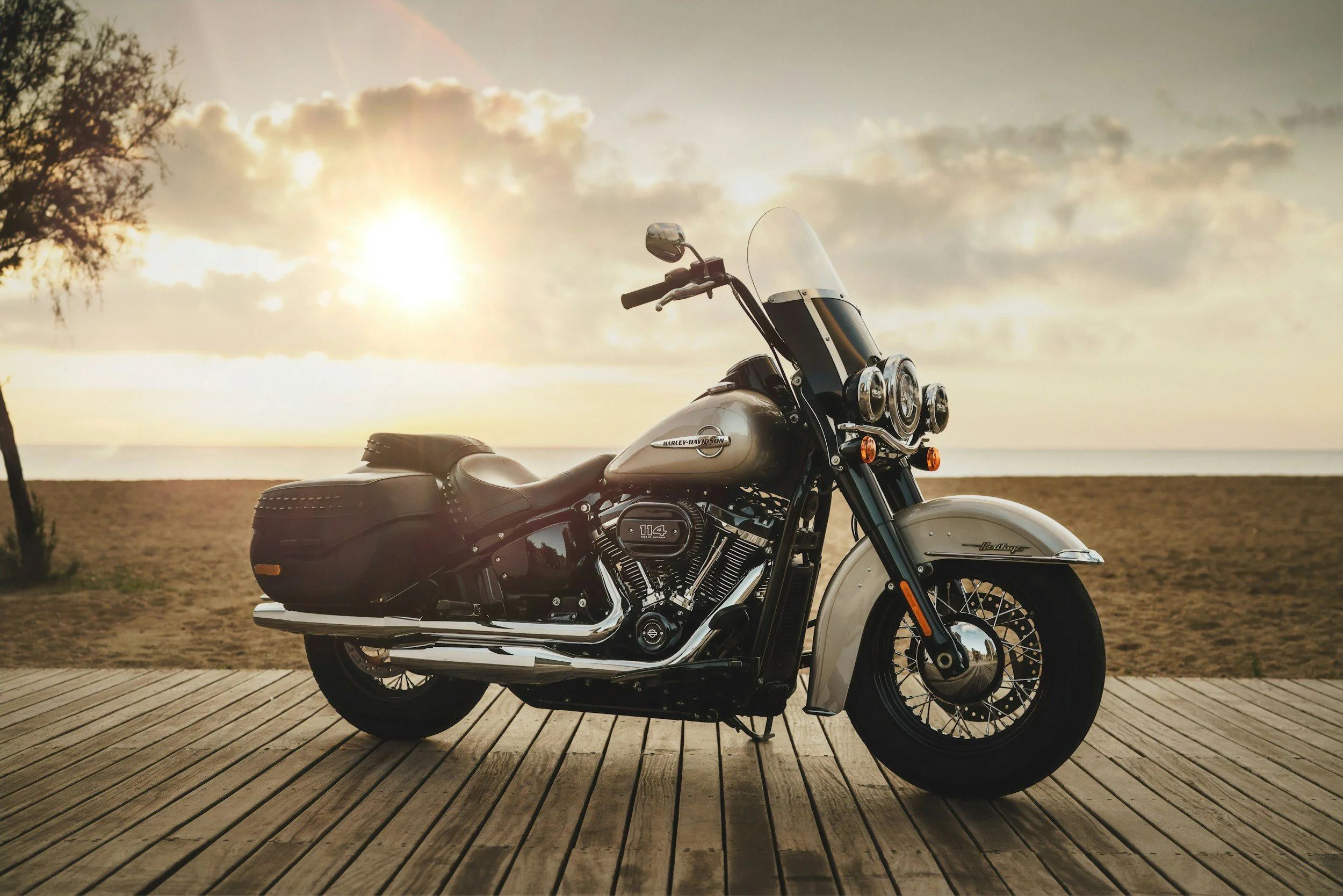
Motorcycle appraisal for stock, custom and classic bikes
A motorcycle appraisal values the bike you actually own, with its real configuration, mileage, maintenance and documented modifications, for California riders facing a total loss, theft, diminished value claim or sale. The CDI says standard policies usually limit coverage for non-factory equipment, and ProValue Appraisal completes most reports in 2 to 4 business days.
Certified auto appraiser. Free consultation, no upfront cost.
Motorcycle appraisal: why a bike is not a small car
Motorcycle values are harder to pin down than car values. Fewer bikes change hands, model lines change often, and owners personalize motorcycles far more than they personalize cars. Two bikes of the same year and model can be worth very different amounts: one is stock, the other has a new exhaust, upgraded suspension, a touring seat, hard bags and a tuned engine.
A motorcycle appraisal is an independent, documented opinion of what one specific motorcycle is worth, or how much value it lost, for a stated purpose. ProValue’s motorcycle values look at condition, mileage, maintenance, factory configuration and documented modifications. The goal is to separate your motorcycle from the standard model description and reach a value that reflects what it actually is.
ProValue Appraisal is a family-owned, independent appraiser in Glendale. We write appraisal reports for riders, attorneys and lenders. We do not give legal advice. In an appraisal clause case, Henry reads the insurer’s report and negotiates the value with the insurer’s appraiser.
- First step
- A free consultation: we tell you honestly whether an appraisal is worth it.
- Cost to start
- Free consultation, no upfront cost. Pricing is discussed when you call.
- How long
- Most reports in 2 to 4 business days.
- Where
- In person in 13 Southern and Central California counties. Online anywhere else in the state.
- Makes we see
- Harley-Davidson, Honda, BMW
- Inspection
- On-site or virtual
- Report turnaround
- Most in 2 to 4 business days
- Free consultation
- No upfront cost
Makes and styles we appraise
ProValue appraises motorcycles from Harley-Davidson, Honda, Yamaha, Kawasaki, Suzuki and BMW, among others. The work covers touring motorcycles, cruisers, sport bikes and racing machines, from vintage Harleys to modern sport bikes. Each style has its own buyers and its own value signals:
Touring bikes
Factory and aftermarket luggage, fairings, audio, comfort seats and mileage history matter. High miles on a well-maintained touring bike are not the same as high miles on a neglected one.
Cruisers
Personalization is common: exhausts, handlebars, seats, lighting, paint and chrome. The question is which changes buyers in your market pay for.
Sport bikes
Condition, crash history, stock parts kept with the bike and the quality of any performance work matter a great deal. Track use and frame damage need careful documentation.
Racing and track bikes
These are often far from stock, and their market is narrow. Build records and parts lists carry much of the weight.
Factory stock, custom and classic motorcycles
Whether you own a factory model, a custom chopper or a classic, the appraisal approach changes with the type of bike. This table shows the main differences.
Factory stock
- What drives its value
- Model, trim, year, mileage, condition, factory options, maintenance
- Where standard valuations go wrong
- Wrong trim or package, comparables with far more miles, missing factory accessories
- Evidence that helps most
- VIN, original sales paperwork, service records, clear photos
Custom or modified
- What drives its value
- Quality and brand of parts, installation, how buyers value the changes, base bike condition
- Where standard valuations go wrong
- Custom parts left out entirely, or valued at receipt cost instead of market behavior
- Evidence that helps most
- Receipts, installer invoices, build photos, dyno sheets, before and after photos
Classic or vintage
- What drives its value
- Originality, matching numbers, restoration quality, rarity, documented history
- Where standard valuations go wrong
- Treated as an old used bike instead of a collectible
- Evidence that helps most
- Restoration records, ownership history, period documents, detailed photos
Customized motorcycles often exceed standard valuations because of their modifications, which is why every enhancement has to be accounted for in the report. For bikes with extensive changes, see the modified and custom vehicle page.
What drives a motorcycle’s value
Motorcycle values can vary considerably based on five things:
Condition
Paint, tank, chrome, frame, forks, wheels, controls and seat. Small dents and scrapes matter more on a bike, where everything is visible.
Mileage
Read alongside the type of bike and how it was maintained.
Maintenance
Service records for oil changes, valve adjustments, belts or chains, tires and brakes show how the motorcycle was kept.
Factory configuration
Trim level, engine, factory options and special editions.
Documented modifications
Parts and work you can prove with receipts, invoices and photos.
Custom parts: market behavior, not purchase cost
Custom components may increase value in some cases, but their contribution must be supported by current market behavior rather than by purchase cost alone. The California Department of Insurance glossary defines fair market value as what a knowledgeable buyer, under no unusual pressure, is willing to pay and a knowledgeable seller is willing to accept (CDI auto insurance glossary). A receipt shows what you spent. A motorcycle appraisal looks at what buyers pay for bikes built the same way.
Key point: Keep the stock parts you removed, and keep every receipt and installer invoice. Original parts and paperwork make a modified motorcycle easier to value and easier to sell.
Motorcycle insurance claims in California
Accident and total loss
Motorcycles are totaled more easily than many cars. A low-speed drop can damage the tank, forks, wheels, controls, lights and bodywork at once, and parts and labor are high compared with the bike’s value. The California Department of Insurance accident guide, So You’ve Had an Accident, What’s Next?, says that generally the company pays the lesser of the repair cost or the actual cash value, and that actual cash value in California means fair market value unless the policy defines it otherwise. An accident-related appraisal for an insurance claim documents what your motorcycle was worth before the loss, so the repair-or-total decision and any settlement start from an accurate number. See total loss valuation for the full process.
Aftermarket equipment and the Additional Equipment Endorsement
The same CDI guide says standard policies usually give no or limited coverage for non-factory equipment, such as aftermarket stereos, tires and wheels, unless you buy extra coverage. The CDI glossary describes an Additional Equipment Endorsement as coverage for certain parts and equipment not installed by the manufacturer, subject to a maximum limit listed on the endorsement. If your bike carries custom parts, compare their value with that limit now, before a loss. Riders with high-value custom or classic bikes may also ask their insurer about an agreed value appraisal.
Diminished value after repair
A motorcycle with an accident history can sell for less than an identical bike with a clean history, even after a quality repair. When another driver caused the crash, that loss is usually claimed from the at-fault driver’s insurer. A diminished value appraisal measures the drop in market value, and you or your attorney decide how to use it.
Theft
Motorcycles are easy to move, and many are never recovered. A stolen motorcycle cannot be inspected, so the value has to be rebuilt from the VIN, factory information, photos, mileage records, service history, purchase documents and receipts for upgrades. Read more on theft and vandalism appraisals.
Buying, selling and financing a motorcycle
When you buy a used motorcycle in California, check it before you sign. California Vehicle Code section 11713.21 requires dealers to offer a contract cancellation option on many used vehicle sales, but the section states it does not apply to a motorcycle, and private-party sales are not covered by it at all. A pre-purchase inspection looks at condition and fair market value while you can still walk away.
Financing appraisals give lenders a documented value for loan decisions, and an appraisal also helps a seller set a price a buyer can check.
How a motorcycle appraisal works
Free consultation
You describe the bike and the reason for the appraisal. If there is an insurer’s report, send it.
Scope of work
We confirm what the assignment needs and agree the fee before work begins.
On-site or virtual inspection
When an inspection is possible, we document the motorcycle’s visible condition and equipment. When it is not, the analysis uses photographs, records and other evidence.
Market research
We find comparable motorcycles in the relevant market and adjust for mileage, condition, configuration and documented modifications.
Report
Most reports are completed within 2 to 4 business days and delivered as a signed PDF. If you have questions about the report, we explain our findings to you in writing.

Get started
Call (424) 444-3737, open Monday to Saturday, 9 AM to 6 PM. On-site inspections are available in 13 counties, from San Diego and Imperial up to Santa Barbara, San Luis Obispo and Fresno, and virtual appraisals elsewhere. The consultation is free, and fees are agreed before any work begins.
Common mistakes motorcycle owners make
- Assuming custom parts are covered without checking the policy limit
- Throwing away receipts and installer invoices
- Expecting a receipt total to equal added market value
- Accepting a stock-model valuation for a heavily modified bike
- Skipping a pre-purchase check because a cancellation option is assumed
- Waiting to photograph the bike until after a theft or crash
Estates, and what comes after the report
Classic motorcycles for deeds, trusts and estates
Classic motorcycle valuations are often needed for deeds and trusts, estate planning and divorce settlements, where a family, trustee or attorney needs a neutral written value. A classic bike’s value rests on originality, matching numbers, restoration quality, documented history and current demand for that model. The report sets out the bike’s details, the evidence used and the value conclusion as of the date that matters for the assignment. See estate appraisals and divorce appraisals for those uses.
Your options after a motorcycle appraisal
You submit the report to your insurer, lender, buyer or attorney. In an insurance dispute, the steps after that are yours or your attorney’s to take: a request for reconsideration, the policy’s appraisal provision if it has one (ProValue can act as your appraiser), the Department of Insurance at 1-800-927-4357 through its Getting Help page, or legal advice from a licensed California attorney. A report does not guarantee that an insurer will change its offer; it gives you documented market evidence for your request.
Get a value you can stand behind.
Tell us about the vehicle and what the appraisal is for. We tell you honestly what it needs, and there is no upfront cost.
Certified auto appraiser. Free consultation, no upfront cost.
Call Henry
(424) 444-3737- Open Monday to Saturday, 9 AM to 6 PM
- 121 W Lexington Dr, Suite 418B, Glendale, CA 91203
Call Henry
Tell Henry what happened and what the insurer has offered. The consultation is free and there is no upfront cost.
Call (424) 444-3737Open Monday to Saturday, 9 AM to 6 PM
Questions people ask
How is a motorcycle’s value affected by aftermarket parts and custom work?
Custom parts can raise a motorcycle’s value, but only to the extent buyers in the current market pay for them. Purchase cost alone does not set the value. Popular, well-installed parts from known brands tend to help, while heavy personal styling may narrow the pool of buyers. A motorcycle appraisal documents each modification and supports its contribution with market evidence, not just receipts.
Does my motorcycle insurance cover the custom exhaust, seat and bags if the bike is totaled?
It depends on your policy. The California Department of Insurance says standard policies usually give no or limited coverage for non-factory equipment unless you buy extra coverage. An Additional Equipment Endorsement covers certain non-factory parts up to a maximum limit listed on it. Check your declarations page now, and keep receipts and photos of every part on the motorcycle.
Can a dealer’s contract cancellation option let me return a used motorcycle in California?
No. California Vehicle Code section 11713.21 requires dealers to offer a contract cancellation option on many used vehicle sales, but the section states it does not apply to a motorcycle. That makes the check before you sign more important. A pre-purchase appraisal of the motorcycle looks at condition and fair market value while you can still walk away.
How is a classic motorcycle valued for a trust, deed or estate?
A classic motorcycle is valued on originality, condition, restoration quality, documented history and the prices similar bikes bring in the current market. For a trust, deed or estate, the appraisal sets out the motorcycle’s details, the evidence used and the value conclusion as of the relevant date, so the family, trustee or attorney has a written basis for the figure.
Can a motorcycle appraisal be done without seeing the bike in person?
Yes, in many cases. When an inspection is not possible, ProValue can complete a motorcycle appraisal from clear photographs, records and other available evidence. Send wide shots of both sides, the engine, the odometer, the VIN, any damage and every modification. Some insurance claims or rare bikes may still call for an in-person inspection.
Can I claim diminished value on a motorcycle repaired after someone else hit me?
Often, yes. A repaired motorcycle with an accident history can be worth less to buyers than an identical bike with a clean history. That loss is usually claimed from the at-fault driver’s insurer. A diminished value appraisal for a motorcycle measures the drop in market value after repairs, and you or your attorney decide how to use it.
Related appraisals
- Modified and CustomLifted trucks, tuned cars, custom bikes and full builds.
- Agreed Value for InsuranceSet the insured value of a collector or specialty vehicle.
- Diminished ValueYour car was repaired, but its resale value dropped.
- Total Loss ValuationThe insurer totaled your car and the offer is too low.
- Pre-Purchase InspectionCheck condition and value before you buy a used vehicle.
In person near you
We inspect vehicles in person in Los Angeles, Orange, Ventura, San Bernardino, Riverside, San Diego, Santa Barbara, Kern, San Luis Obispo, Tulare, Kings, Fresno and Imperial counties. Each county page lists every city we cover there.
- Los Angeles County
- Orange County
- Ventura County
- San Bernardino County
- Riverside County
- San Diego County
- Santa Barbara County
- Kern County
- San Luis Obispo County
- Tulare County
- Kings County
- Fresno County
- Imperial County
- Glendale
- Long Beach
- Los Angeles
- Pasadena
- Anaheim
- Irvine
- Oxnard
- San Bernardino
- Riverside
- San Diego
- Santa Barbara
- Bakersfield
- All areas we serve
Updated